Interstate moves are tougher on your belongings than local removals — longer transit, more handling points, tighter load planning, and less room for “we’ll fix it later”. That’s why packing services in Brisbane aren’t just a convenience; they’re risk control. This page explains how pre-packing for interstate moves works, what standards actually matter, and how Interstate Removal Company helps you reduce damage in transit while keeping your pickup window and delivery window on track. If you’re booking the whole move, start with our Brisbane interstate removalist services.


Interstate transport increases the “stress load” on your goods: longer travel time, vibration, braking, cornering, and the reality that stacked cartons must stay stable for days, not minutes. Proper carton packing for removals means strong boxes, sensible weight limits, filled voids, and correct sealing so stacks don’t collapse. Good packing also supports secure load planning — the load can only be strapped and stabilised properly if cartons are firm and uniform enough to stack safely. If you’re still planning dates and tasks, use the Brisbane interstate moving checklist to build a packing timeline before moving that actually fits your schedule.
There’s no one “best” packing option — it depends on time, budget, and risk tolerance. Full pre-pack is ideal when you want speed and consistency: professional packers and movers handle the whole home, label everything clearly, and set the load up for transport. Partial pack is perfect when you’re happy to pack clothes and low-risk items yourself, but want help with fragile zones like kitchens, artwork, and electronics. Owner-packed can work too — but only if you follow the standards that keep cartons stackable and safe. If you’re balancing budget, the pricing factors for Brisbane interstate moves page explains how packing level can affect labour time and overall cost.
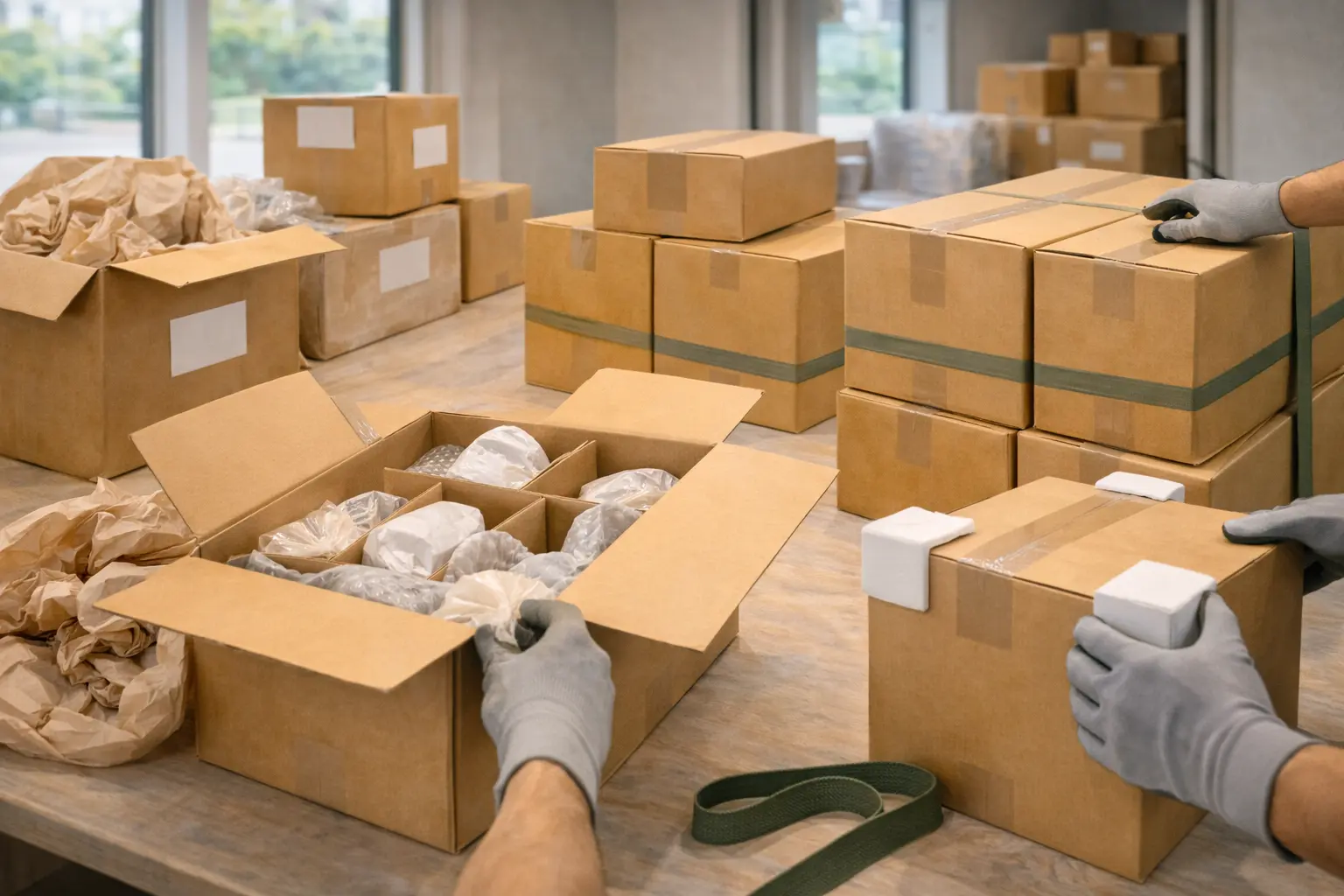

Fragile goods don’t fail because they’re “fragile” — they fail because they’re allowed to move inside the pack or take point-load pressure in the stack. Quality fragile item packing uses correct cushioning, firm void-fill, and stable positioning so items can’t shift. For glassware and kitchen packs, the right mix of bubble wrap and packing paper matters (paper reduces movement; wrap cushions impact). For TV and electronics packing, the goal is rigid protection, edge support, and keeping screens away from pressure points. Interstate Removal Company packs with transport in mind, not just storage — because long-distance transit punishes “almost good enough” packing.
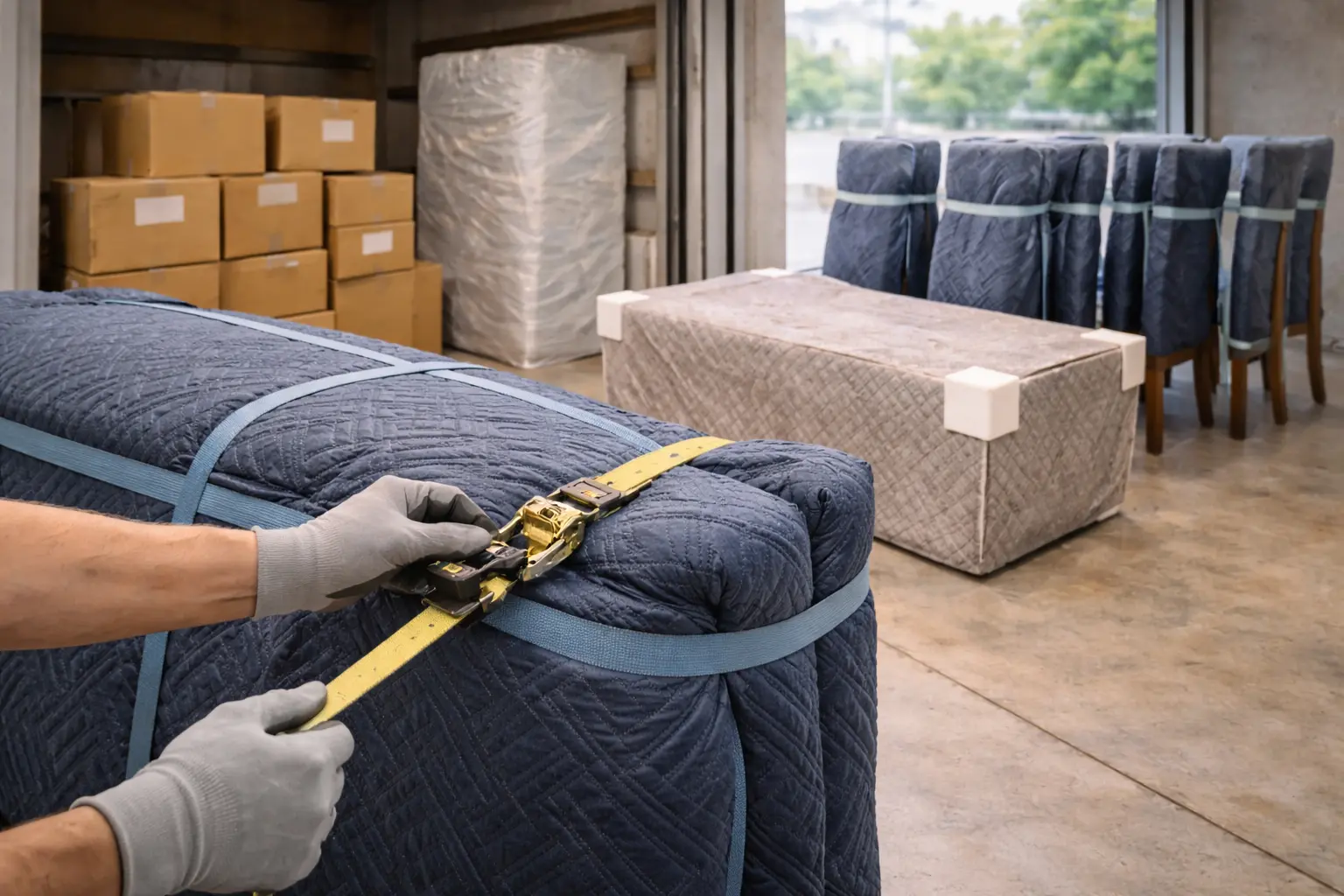
Furniture damage usually happens in two places: while being handled through tight access, and when items rub or shift in transit. That’s why furniture wrapping and padding isn’t optional on interstate moves — it’s how you prevent scuffs, dents, fabric pulls, and edge damage. Mattresses need full mattress protection for moving to keep them clean and avoid snagging. And it all ties back to load stability: wrapped furniture creates predictable surfaces so the load can be strapped properly without cutting into materials. If you’re moving from an apartment or tight-access home, plan the protection around your path of travel and lift rules — see apartment logistics and lift bookings.

Labelling isn’t busywork — it’s how you reduce time on delivery day and avoid the “where did that box go?” spiral. Good labelling boxes for delivery means room name plus priority (for example, “Kitchen – Open First”). Pair that with an inventory list for removals and your delivery becomes faster, easier to verify, and simpler to unpack. This also protects your timeline when you’re working with a delivery window: you can prioritise what matters and keep the home functional early. If you’re using shared loads, good labelling and inventory becomes even more valuable — see the Brisbane backloading guide for how to stay organised in part-load moves.
The biggest interstate packing mistakes are predictable — and avoidable: overweight cartons that collapse, half-filled boxes that crush, poor sealing, and fragile items packed with “wiggle room”. Another common issue is trying to load restricted goods (aerosols, fuels, gas bottles, certain chemicals), which can halt loading and disrupt scheduling. Remove these early and check the full list of restricted items and dangerous goods so your pickup runs smoothly. If you want the simplest way to stay on track, use the Brisbane interstate moving checklist and lock your packing timeline before moving — the schedule is easier to protect when you’re not packing in panic mode.
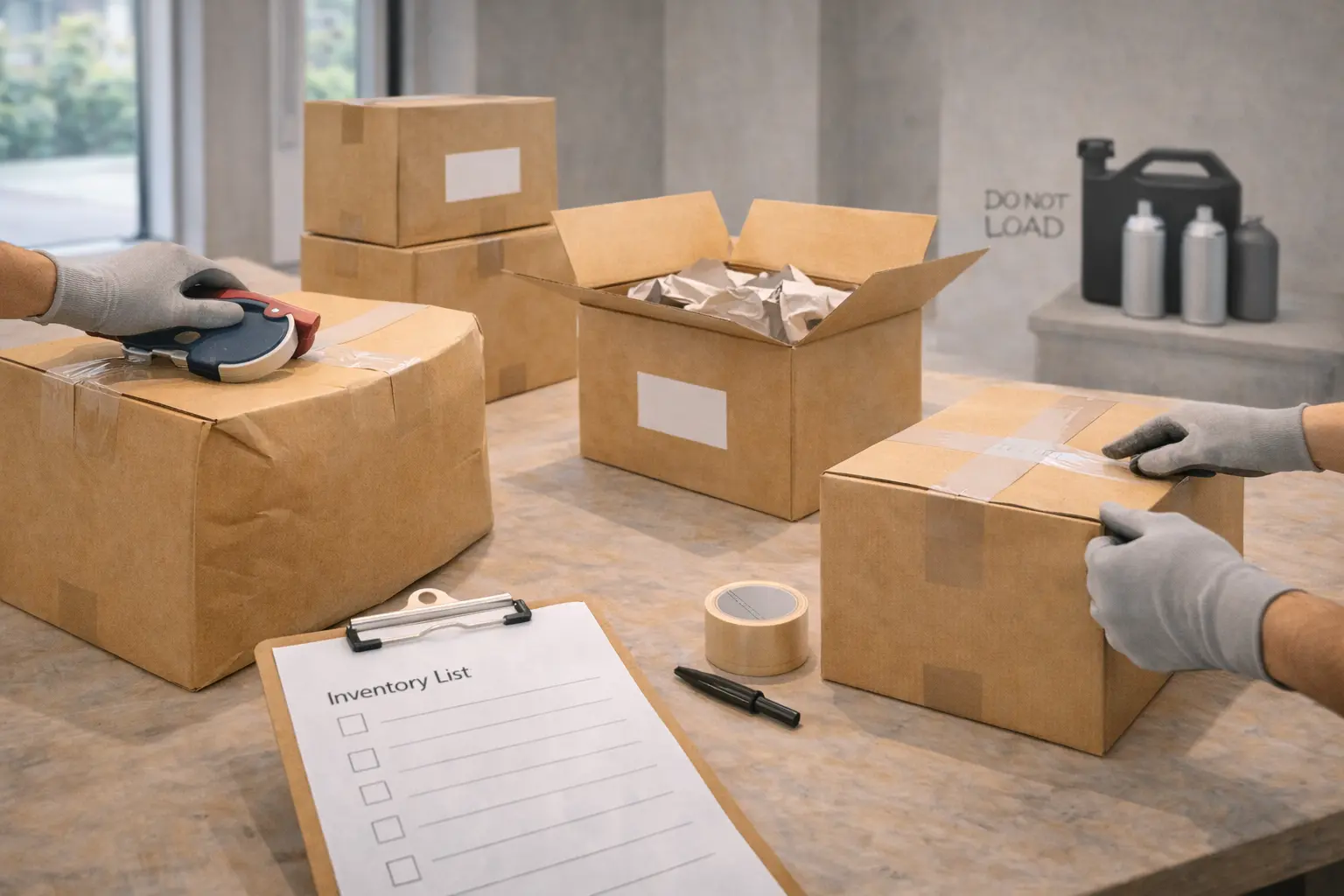
If you want fewer breakages, faster loading, and a smoother delivery day, the goal is simple: pack for transport, not for storage. This is what we focus on at Interstate Removal Company — because a great removals team can only protect what’s packed correctly. Use this checklist whether you’re packing yourself or booking professional packers.
If you want to understand how packing level affects pricing, review pricing factors for Brisbane interstate moves. And if you’re building your overall timeline, the Brisbane interstate moving checklist will help you plan dates, utilities, and admin around your packing schedule.
Bottom line: packing is where most interstate moves are won or lost. With the right standards — and the right support — you protect your furniture, protect your cartons, and protect your schedule. That’s exactly what Interstate Removal Company is here for.
Tell us your move date range and what you’re moving, and we’ll recommend the right packing level — owner packed, partial pack, or full pre-pack — to protect your goods and your timeline.
Get a Free Quote